The difference between the TP-Link TL-WR841N and TL-WR841ND

The difference between the TP-Link TL-WR841N and TL-WR841ND

I see people asking about the difference between the TP-Link TL-WR841N and TL-WR841ND (sometimes they just ask TP-Link TL-WR841N vs TL-WR841ND). Since nobody else seems to have answered, I’ll take the question.
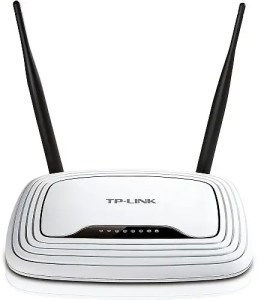
TP-Link TL-WR841n
This is the TP-Link TL-WR841n.

Here’s how to decode TP-Link model numbers. This is true of the 841 series, which is my go-to for the moment when I need a capable yet inexpensive router, but also other TP-Link models.

“TL” stands for TP-Link. “WR” stands for wireless router. The numbers tell you where the model stands in the product line. Beefier routers have larger numbers. “N” stands for the type of networking, which, in this case, is 802.11N. “D” stands for detachable antennae.

If you don’t need to be able to detach the antennae to replace them with bigger, longer-range models, you can save some money by buying the N-model. Otherwise, the TL-WR841N and TL-WR841ND are functionally identical. They both use the same DD-WRT build.

Fare thee well, Super Civic. And thanks for everything.

Last week, at about 238,000 miles, we traded my wife’s 2002 Honda Civic. It was good to us.

She drove that car the night we first met. It was the car we drove home after we got married. We drove our dog home from the Humane Society in it, I drove her to the hospital in it, and we drove our two boys home from the hospital in it. When a car lasts 13 years, it gets to participate in a lot I guess.

Read more

Beware “graded value” baseball cards on Ebay

There are a few hucksters on Ebay, whom I don’t care to give free advertising by mentioning by name, who hawk “graded” cards on Ebay and claim them to be especially valuable. One even puts supposed appraised values in his listings in parenthesis, then invites you to visit his page for an explanation of “graded” value, where he cites an example of a run-of-the-mill 1970s star card, normally worth $60, being worth $2,500 once graded.

The thing is, that’s an edge case. It’s important to understand those edge cases to avoid a ripoff.

Read more

Tricks for giving presentations at work

One of my peers–he does exactly what I do at work, but for Unix machines while I cover Windows–asked me for some tips for giving presentations after he gave a presentation last week. I’ve presented a couple of times myself, and from the feedback I received, I didn’t make too much of a fool of myself, so he asked for my feedback.

I gave him a few tips that have served me well over the years.

Read more